
NSW Industrial Land Supply Vacancy and Absorption Study
CLIENT: PROPERTY COUNCIL OF AUSTRALIA
-
NSW has substantial industrial-zoned land, but headline supply figures do not reveal whether that land is in the right location, serviced, accessible and genuinely capable of development. Solve Property Group’s statewide evidence base reframes the industrial land challenge around deliverability rather than zoning alone.
-
The Property Council of Australia commissioned Solve Property Group to examine industrial land supply, vacancy and absorption across Greater Sydney, the Hunter and Central Coast, and the Illawarra. The study responds to a critical policy question: does the industrial land identified in strategic plans translate into the practical capacity needed to support freight, logistics, manufacturing, data centres and essential urban services?
-
Our approach brought together strategic planning, urban economics, property research and geospatial analysis to assess 424 industrial precincts. The work moved beyond aggregate zoned-land totals by considering cadastral and valuation data, industrial zoning, physical and environmental constraints, existing uses, development timing, infrastructure readiness and market absorption. Outputs were manually validated to test whether land classified as undeveloped could realistically contribute to supply. By integrating complex datasets with market insight and senior strategic judgement, we translated the evidence into a clear policy and investment narrative - providing industry and government with a more practical basis for deciding where land, infrastructure and planning intervention are most urgently required.
-
Greater Sydney contained 4,228 hectares of assessed industrial supply and potential supply. Of this, 2,035 hectares was identified as short-to-medium-term supply - equivalent to around eight years at the study’s adopted demand rate of 255 hectares a year.
The existence of zoned land does not establish that it is development-ready. Sewer capacity was often unknown, electricity capacity varied, freight access was uneven, and sufficiently detailed water and gas data were unavailable.
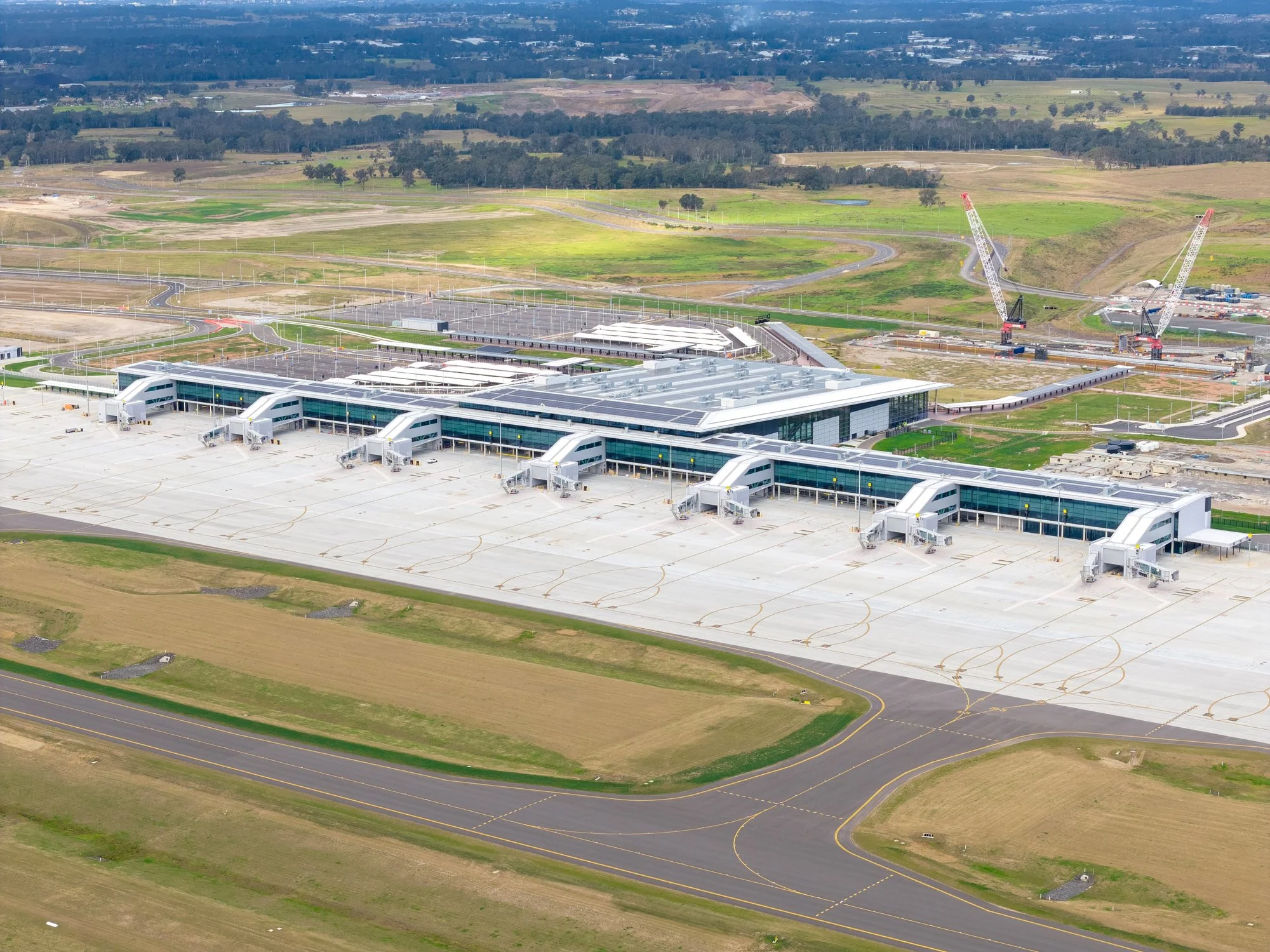
The Outer South West and greater Aerotropolis will drive near-term industrial growth, but delivery depends on servicing, freight access, functional development pads and practical planning controls.
Built-form vacancy and land supply measure different things. A rise in available premises does not remove a shortage of well-located, serviced land capable of accommodating specific industrial users.
Industrial outdoor storage occupied 4,908 hectares across the study areas and performs an essential role in port trade, logistics, construction and transport operations.
An estimated $76.6 billion data-centre investment pipeline highlighted intensifying competition for serviced sites, electricity and water capacity.
-
Industrial land supports the systems that keep cities and regions functioning: goods movement, food and medical distribution, construction supply, repair services, manufacturing, waste and recycling, digital infrastructure and last-mile delivery. These uses are not interchangeable. Each requires a different combination of location, lot configuration, access, utilities and cost. Policy based only on gross zoned-land totals risks overstating effective supply and delaying the infrastructure and planning decisions needed to unlock productive capacity.
-
A Delivery Focused Agenda
The study calls for infrastructure investment that converts zoned land into development-ready capacity; faster investigation of future precincts; planning controls that allow established industrial areas to renew without losing floorspace; protection and replacement of strategically important outdoor-storage clusters; better tracking of data-centre demand and utility requirements; and a more transparent Employment Land Development Monitor focused on genuine development readiness.

Download the keynote presentation given at the PCA NSW Industrial & Logistics Summit to explore the evidence, subregional findings and recommendations.
Contact us for a copy of the research.
Need an evidence base for a complex property or policy decision?
Solve Property Group delivers commissioned research that connects data, policy, market dynamics and delivery. Contact us to discuss a tailored study for your organisation, precinct, sector or region.
