
Rethinking Employment Lands in a Changing Economy
Part 2 of a two-part series exploring the evolving role of employment and industrial lands — and how these areas are being reshaped by a changing economy.
Article by George Bougias, Partner - Advisory

Seaport District, Boston — industrial land reallocated to concentrate firms, capital and talent in one location, reflecting an economic model where proximity and interaction drive productivity.
Introduction
We are, in many ways, still planning 21st century economies with 19th century land-use logic. While planning systems continue to rely on separating land uses, the structure of the economy has changed fundamentally. The challenge is not only how land is zoned, but how well planning frameworks reflect the way modern economic systems actually function.
A Changing Economic System
Contemporary evidence — from OECD place-based policy and broader foresight and leading-edge thinking — points to a structural shift in how economies operate. Economic systems are becoming more networked, more flexible and more knowledge-intensive. Value is increasingly created through connections between firms, sectors and places.
In this context, productivity is driven less by separation and more by connectivity, adaptability and agglomeration. Economic performance now depends increasingly on integration and networks rather than separation and specialisation.

Poblenou, Barcelona — industrial zoning replaced with a framework that allows business, housing and services to co-locate, reflecting the breakdown of traditional boundaries between economic activities.
Blurring of Economic Functions
Traditional distinctions between manufacturing, services, digital activity and logistics are increasingly blurred.
Many activities now combine production, distribution and customer interface in a single location, often with reduced environmental and operational impacts. At the same time, a geographic tension is emerging, with some activities decentralising while others concentrate in key nodes such as logistics hubs and innovation precincts.
Cities and nations are increasingly competing not only on traditional industrial capacity, but also on the strength of their innovation ecosystems.
Human Capital and the Role of Place
A critical shift underpinning these changes is the increasing importance of human capital. Talent attraction and retention are now central to economic performance, elevating the role of amenity, accessibility and place quality. These are no longer secondary considerations, they are core economic drivers.

Central Sydney — firms and workers cluster where accessibility and amenity align, reflecting the growing importance of agglomeration and labour market density in driving economic performance.

Barangaroo, Sydney — a former container port redeveloped into a major commercial precinct through state-led rezoning and infrastructure delivery, demonstrating how planning decisions can fundamentally reshape the economic role of land when they respond to underlying shifts in economic activity.
The Planning–Economy Gap
Planning frameworks have not kept pace with these changes. In many cases, land-use categories act as simplified proxies for far more complex economic dynamics. While useful for regulation, they often obscure how production, markets and spatial relationships actually function.
The major economic reforms of the late 20th century further reshaped the Australian economy, yet planning frameworks adapted slowly and often retained earlier assumptions. Today, the gap is widening.
The speed of economic change now exceeds planning cycle speed, creating a structural lag between economic reality and planning response.
“Economic change is now moving faster than planning systems can respond — yet we continue to regulate land as if the structure of the economy were stable.”
Employment Lands as Strategic Assets
Employment lands should be understood as strategic economic assets. They are not simply zones for particular activities, but critical inputs into how cities and regions function economically. This requires a shift in thinking — from managing land uses to enabling economic systems to evolve over time.
A more appropriate approach focuses on managing impacts — more accurately understood as externalities — setting performance expectations and maintaining flexibility.
In this context, industrial zoning can be seen as a blunt instrument for managing what are, in essence, externality and land allocation challenges.

Manhattan, New York City — an employment core shaped through successive redevelopment cycles, reflecting how land use adapts over time to accommodate changing economic structures rather than fixed categories.
Interdependencies: Housing and Population
Employment outcomes are closely tied to population and demographic dynamics. Factors such as housing affordability, migration and labour force participation shape economic performance in fundamental ways. Our work across the country shows that these relationships are direct and material.
This reinforces the need to better integrate housing, population and employment planning.
An Institutional Challenge
This is ultimately an institutional challenge as much as a planning one. Existing systems are largely designed for stability and control, whereas the current context requires adaptability and responsiveness.
Planning is only one part of a broader system that includes governance, infrastructure, economic policy and data.
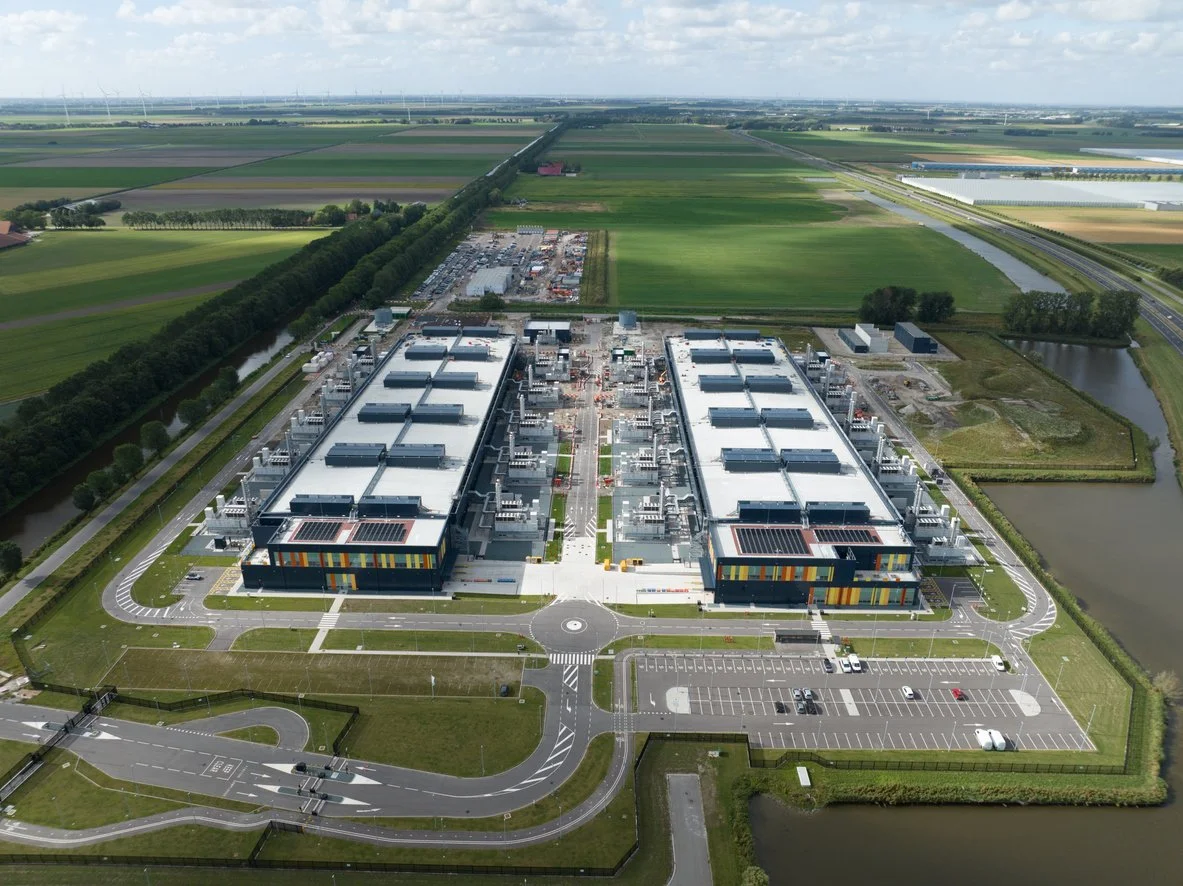
A data centre in The Netherlands — as data needs rapidly create strong demand for sites, the lack of suitable land, and increasing competition is forcing a discussion on whether they should be located in metro or regional areas.
Data, Intelligence and Emerging Technologies
Better decision-making will depend on improved access to timely economic and spatial intelligence. Emerging technologies, including AI, have the potential to accelerate analysis, support scenario testing and strengthen evidence-based approaches. The question is what role these tools will play in planning — and whether Australia will lead or lag in adopting them.
Looking Ahead
The scale and pace of economic, technological and social change is likely to increase, bringing greater uncertainty.
This highlights the importance of preserving flexibility in how land is used —maintaining option value in the face of uncertainty, rather than locking in assumptions about future economic structure.
Conclusion
The core challenge is not how to categorise land, but how to support evolving economic systems. This requires moving beyond rigid, category-based zoning toward more adaptive, principles-based frameworks, supported by better data, stronger institutional alignment and a deeper understanding of how modern economies function.
Ultimately, the focus should be on enabling land to perform its most valuable role within a dynamic and evolving economic system.
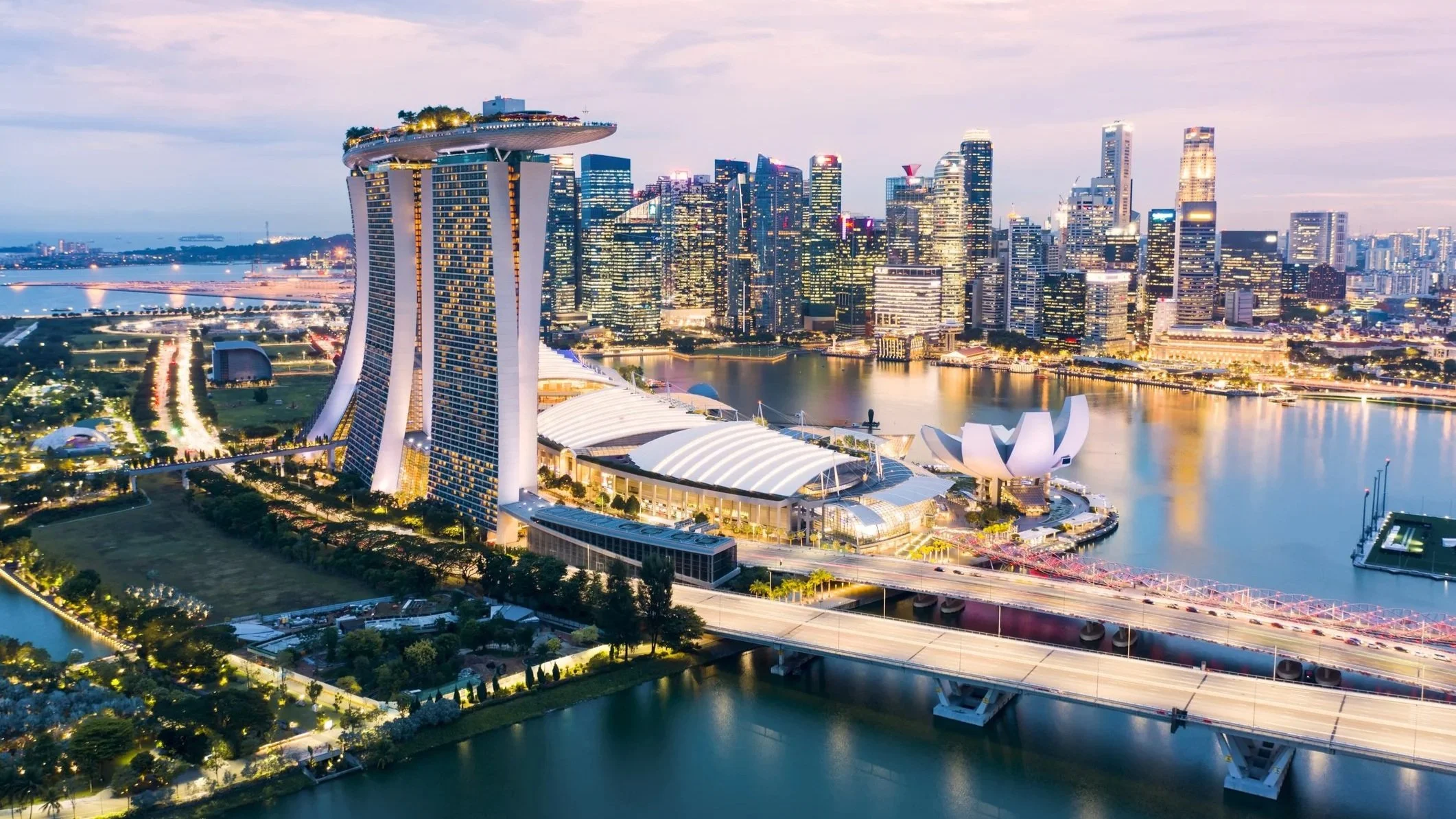
Marina Bay, Singapore — land use, infrastructure and economic strategy are coordinated at the system level, enabling planning to adjust to change rather than lag behind it.